
The Eastern Voice Correspondent
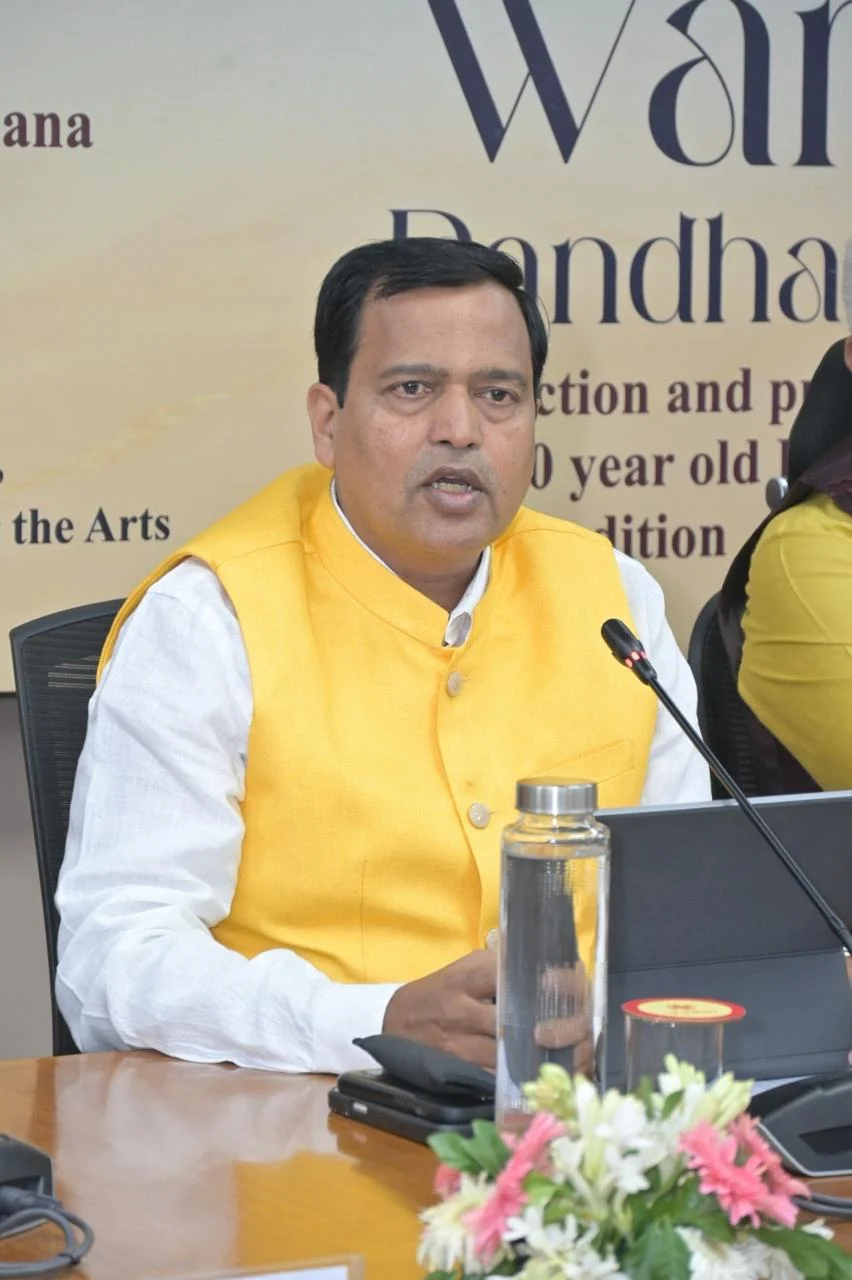
New Delhi. A special event titled “Pandharpur Wari – A Dialogue and Presentation on a 700-Year-Old Tradition” was organized to introduce the diplomatic community to the Pandharpur Wari, one of India’s vibrant cultural and spiritual traditions spanning over seven centuries. The event aimed to acquaint diplomats and cultural representatives from various countries with the cultural, social and civilizational significance of the Wari. Rooted in values such as faith, equality, social harmony, discipline and service, this tradition stands as a unique heritage of Indian culture.
Key dignitaries present on the occasion included Dr. Sachchidanand Joshi, Member Secretary of the Indira Gandhi National Centre for the Arts (IGNCA), Dr. Vijay Chauthaiwale, Head of the BJP’s Foreign Affairs Department; Vaibhav Dange, Founder of the Delhi Marathi Pratishthan; and Prof. Sudhir Lall, Dean at IGNCA.
Diplomats and cultural representatives from Russia, Suriname, the Philippines, Angola, Mauritius, Thailand, the United States, Moldova, Australia, Bhutan, Indonesia and Brazil participated in the event. It served as a significant example of the growing global interest in Indian cultural traditions.
In his address, Dr. Sachchidanand Joshi remarked that India is a land of numerous ancient pilgrimages and cultural traditions. Citing the example of the Kumbh Mela, he noted that the Pandharpur Wari is a similarly unique tradition that has played a vital role over seven centuries in strengthening the cultural character, social harmony, devotion and collective consciousness of Indian society.
In his address, Dr. Vijay Chauthaiwale shed light on the historical background of the Warkari tradition and the circumstances surrounding its emergence. He stated that during periods of foreign invasions and social instability, saints such as Dnyaneshwar, Namdev, Eknath and Tukaram infused self-confidence, moral strength and spiritual consciousness into society through the Bhakti movement. He stated that the Wari has played a significant role in boosting societal morale, preserving cultural identity and strengthening social unity.
On this occasion, a monograph on the Pandharpur Wari, authored by Vaibhav Dange, was also launched. Following this, Shri Dange delivered a detailed presentation on the Warkari tradition. He described the Wari not merely as a religious pilgrimage but as a vibrant civilizational tradition spanning seven centuries—one that has continuously passed down values of equality, humility, service, discipline, collective participation and devotion from generation to generation. Sharing his personal experiences of participating in the Wari over the past nine years, he remarked that the Wari does not simply bring an individual closer to the Divine; it also fosters greater sensitivity, a spirit of service and humanity.
After the presentation, the attending diplomatic representatives eagerly asked numerous questions regarding the history, organizational structure, discipline, social impact and philosophy of equality associated with the Wari, as well as its role in community building and its relevance in the modern world.
The event concluded with a shared sentiment: the Pandharpur Wari is not merely a religious tradition but a powerful symbol of peaceful coexistence, social inclusion, humanity and the continuity of Indian civilization. The event further strengthened cultural dialogue between India and the diplomatic community from various nations and effectively showcased a unique tradition of India’s rich cultural heritage to the global community.